Strategic environmental assessment: the missing piece in Tonga's SDG planning?
Tonga has adopted the SDGs, but planning is fragmented across agencies. Strategic environmental assessment could help hold it together.
Oct 3, 2026
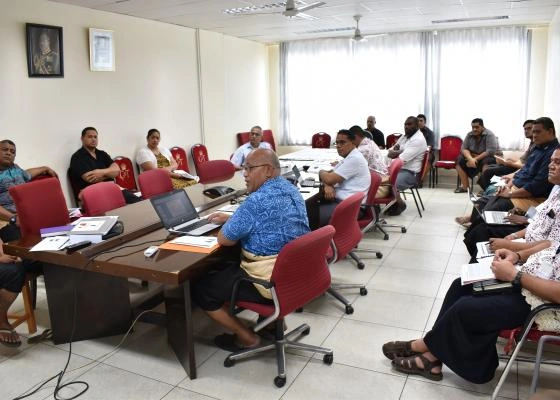
Decision makers in Pacific Island Countries make choices every day that affect the environment and the wellbeing of their communities, yet the wider consequences of those choices for people, ecosystems and the economy are often overlooked. Since 2015, Pacific governments have built the Sustainable Development Goals into their national policies and plans. The SDGs are an ambitious set of 17 goals, and they come with trade-offs and overlaps that can duplicate effort or work against each other if they are not managed together.
Strategic environmental assessment (SEA) is designed for exactly this problem. Where an environmental impact assessment looks at a single project, SEA looks at policies, plans and programmes before they are adopted, building environmental, social and economic considerations into the decision itself. It has been used only rarely in the Pacific. My master's research at the University of Otago asked a direct question: is there a role for SEA in improving planning and policy making towards the SDGs in Tonga?
The study combined an institutional analysis of how the SDGs move from global commitments into national planning with key informant interviews in Tonga. Those interviewed came from government, business and communities involved in national planning and decision making, with a focus on climate action, life below water and life on land (SDGs 13, 14 and 15).
The main challenge was fragmentation. Decision making is spread across many agencies and stakeholders, with little coherence or clear accountability for sustainability across the planning process. Short-term planning, limited staff and limited institutional capacity add to the problem. Culture and power relations also shape decisions in ways that can create communication barriers and weaken consultation. Planning is largely centralised and government led, public participation is often rushed to meet funding and implementation deadlines, and the private sector is under-involved.
There was also encouraging news. Although SEA as a concept was new to most of the people interviewed, several of its elements were already in practice in Tonga. Mechanisms exist to monitor progress and manage the risks of policies and programmes. What is missing is a coordinated way of connecting them, and that is where SEA fits.
SEA could help Tonga in three ways. It can identify cumulative impacts while a policy or plan is still being shaped, before they appear in individual projects where they are costly to fix. It can raise decision makers' awareness of sustainability and the major consequences of what they approve. And its emphasis on public participation supports the SDG promise to leave no one behind. Because the SDGs are so interconnected, a process that tests policies against each other could be the glue that holds national planning together.
For Tonga, and for other Pacific Island Countries working towards their 2030 targets, SEA is worth a serious look. Teulava helps governments and development partners design environmental assessment and safeguards systems that fit how decisions are actually made in the Pacific.
Dorothy Foliaki, Director, Teulava Consultancy. Based on the MSc thesis "Strategic Environmental Assessment and the Sustainable Development Goals: Lessons from Tonga" (University of Otago, 2020).